Materials are carefully selected and proportioned to ensure quality.
2. Mixing
Raw materials are mixed in large mixers.
3. Molding
The compound is spread into a mold that gives the slab its shape and dimensions.
4. Compaction
This step eliminates air and makes the material highly compact and resistant.
5. Curing
The slab is heated to allow the resins to harden.
6. Calibration
Once cured, the slab is polished and finished. The surface can become glossy, matte, or textured.
7. Inspection
Each slab is inspected visually and dimensionally.
Certifications
0
Years of history
0
Colors
1+
waste to recovery
1%
Production process and technology
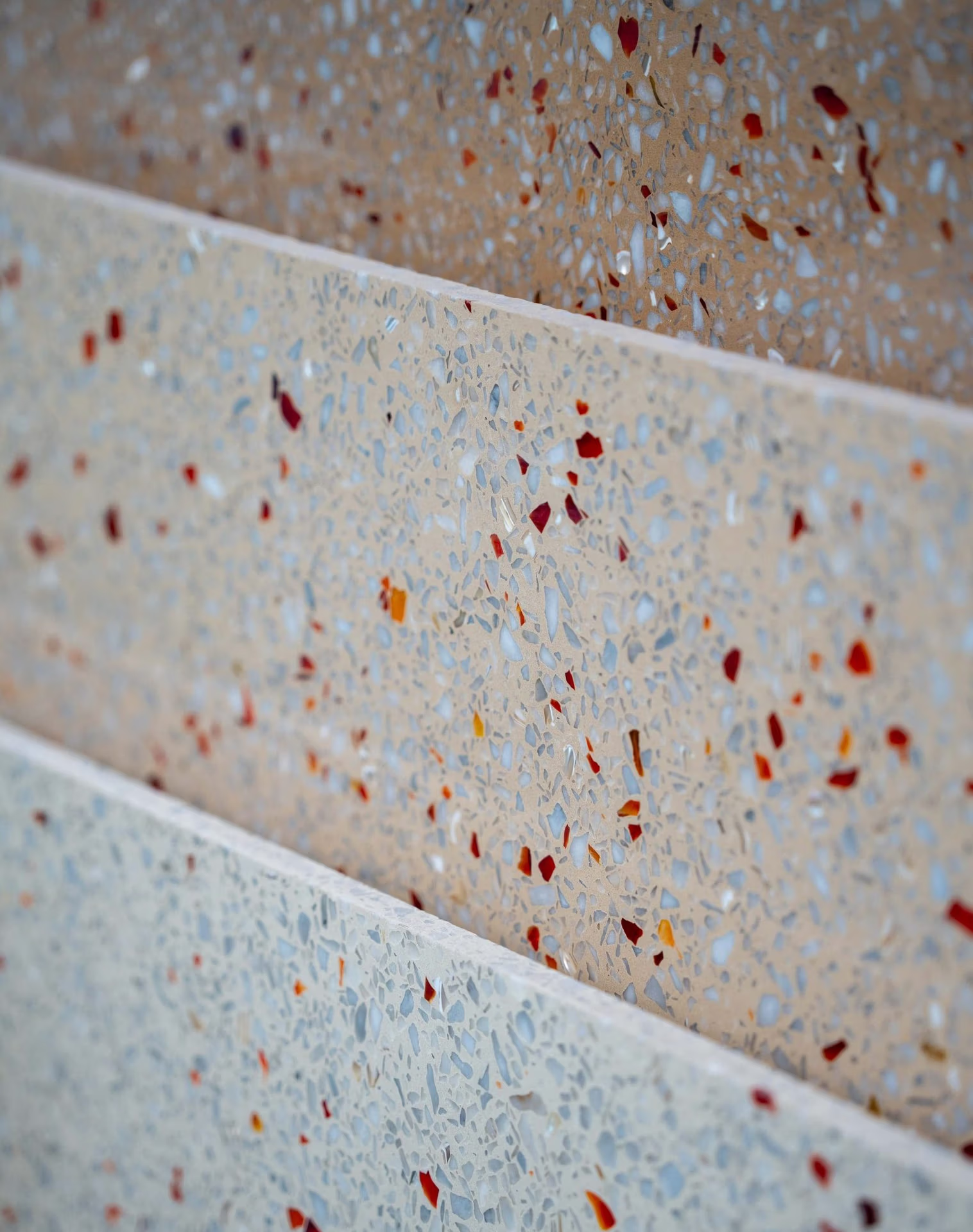
The production process involves mixing selected aggregates (quartz, marble, and minerals) of different particle sizes—from powder to granules of approximately 5–6 mm—together with organic colorants and a structural polyester resin (in a percentage of approximately 7%). The latter not only serves as a binding agent but represents a true engineering element of the material: in the finished product, it enables optimal values of flexural strength, impact resistance, and absorption and, more generally, allows for reconstruction of the composite mass with physical qualities and mechanical performance superior to those of the original natural material.
The polyester resin, whose composition includes a 21% bio-based component of plant origin, is heat-catalyzed and, through a computerized industrial process of vacuum vibro-compression at high pressures, enables the compaction of large-format slabs (120×120 cm and 140×305 cm) in differentiated thicknesses (1 / 1.2 / 2 / 3 cm). This technology allows the product to be modulated according to different application requirements—from cladding to furnishings to worktops—ensuring structural homogeneity, dimensional stability, and long-term reliability. The production cycle also employs single-slab compaction, overcoming the technical and economic limitations of block sawing typical of natural stone, with advantages both in terms of consistent quality and resource optimization.
The mixture is first mixed and homogenized using computerized control units that ensure perfect control of dosages and component distribution. Subsequently, it is dosed—according to production thicknesses—between two sheets of paper on a conveyor belt, which advances the material, still plastic, to the slab pressing phase. Curing takes place in the catalysis chamber, consisting of a multi-level heated tower maintained at a temperature of 80–85 °C, capable of achieving complete solidification of the mixture within approximately 30–40 minutes, roughly half the total time of the entire production cycle of a slab. This process ensures controlled polymerization, essential for achieving stability, strength, and durability of the material.
The slabs thus obtained are then subjected to finishing operations, which include grinding of the two main faces, calibration, polishing, cutting, beveling, and any edge treatments according to the specific intended use. Once finished, Stone Italiana slabs can also be supplied in large quantities, maintaining controlled and certified characteristics: consistency of weight, thickness, compactness, uniformity of pattern and chromatic tone of the visible surface. This enables designers and operators to work with a material that is reliable, replicable, and perfectly integrable into the most complex architecture and interior design projects.